14.04.2026Event
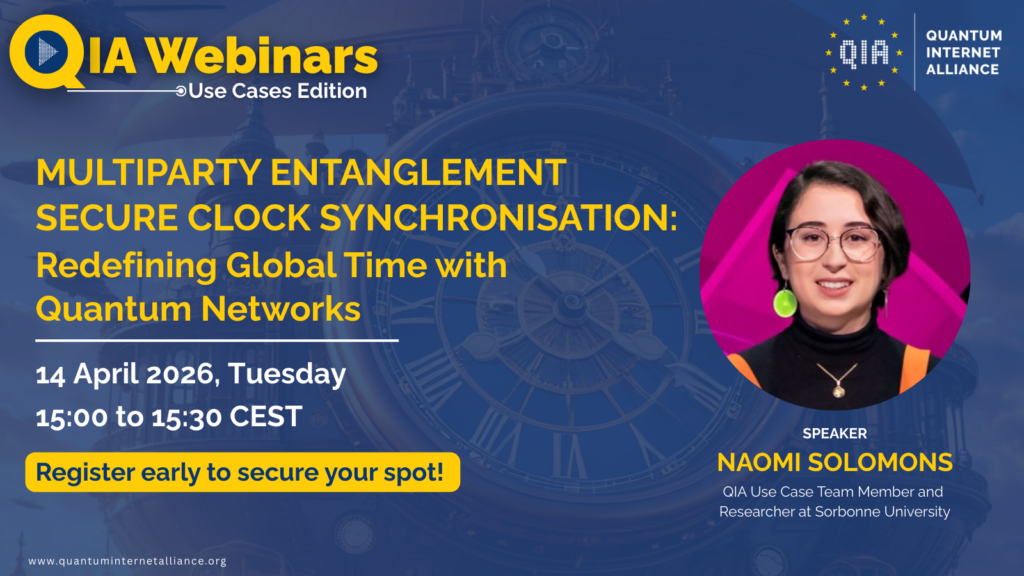
Multiparty Entanglement Secure Clock Synchronisation: Redefining Global Time with Quantum Networks
What if the world’s most precise clocks could work together (securely and without giving up control) to outperform any single time standard?
In this webinar, we explore how quantum networks make this possible. Today’s leading optical clocks, such as those maintained at National Institute of Standards and Technology and Physikalisch-Technische Bundesanstalt, already achieve extraordinary precision at the 10⁻¹⁹ level. Improving beyond this typically means building even more complex and costly systems, or relying on a central reference clock.
Quantum networking offers a different approach.
By distributing special shared quantum states (GHZ states) between multiple clock providers, geographically separated clocks can operate as a coordinated network. Together, they produce a shared time signal that is more accurate and more stable than any individual clock. Crucially, each provider keeps full control of its own system, and no one needs to reveal their local measurement data. Only the final shared result is accessible.
This session led by Sorbonne University Researcher Naomi Solomons will explain the core idea in clear terms, outline how we guarantee privacy in quantum systems, and discuss technical requirements towards enabling a global, cooperative world clock!
Participation is free, but registration is required and places are limited.
Organised by the Quantum Internet Alliance (QIA), this webinar is part of the ongoing series on quantum internet use cases. Register early to secure your spot.
About the Speaker
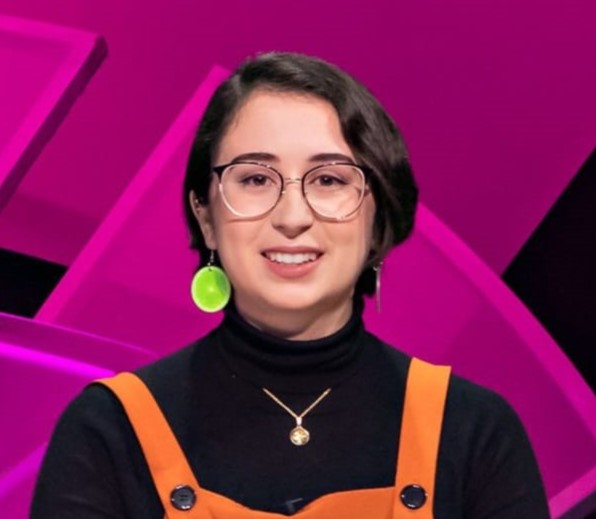
Naomi Solomons
Naomi is a Sorbonne University Researcher working on the QIA project, focused on the use cases of quantum networks, particularly secure delegated quantum sensing (i.e. how can a network calculate the mean of their individual values while ensuring the secrecy of each value?).
She is from Essex in the UK and finished her PhD on Gaussian boson sampling at the University of Bristol in 2024. During her PhD, she worked with the start-ups Riverlane and Duality Quantum Photonics. Since May 2024, she has been part of the LIP6 Quantum Information group in Paris, under the supervision of Damian Markham, understanding the cryptographic properties of networks of quantum sensors.